Evidence
Evidence — Independent References & Case Studies
This page collects the independent references and operational deployments behind YBG's Industrial Oxyhydrogen (Brown's Gas) equipment for industrial process heat and power generation.
The primary third-party reference is the UIBC / Nangia Andersen LLP report Modern Energy: India–UAE Collaboration in Renewable Energy, whose section 4.3 — authored by Mr. Rajan Varshney, DGM – New Initiatives at NTPC Ltd — records oxyhydrogen electrolysers being used for co-firing in coal and gas boilers. Operational material on this page covers FMCG beverage process steam.
Independent Reference for Validation
NTPC / UIBC–Nangia Andersen Report on Industrial Oxyhydrogen for Indian Thermal Power
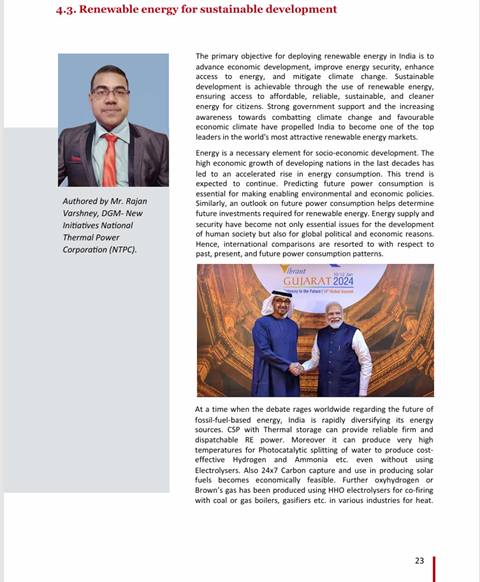
Independent third-party validation of Industrial Oxyhydrogen (Brown's Gas) for industrial process heat in India is documented in the joint report Modern Energy: India–UAE Collaboration in Renewable Energy, published by the UAE–India Business Council (UIBC) in association with Nangia Andersen LLP.
The relevant section is authored by Mr. Rajan Varshney, DGM – New Initiatives at NTPC Ltd (India's largest power utility), who explicitly references Industrial Oxyhydrogen (Brown's Gas) electrolysers being used for co-firing in coal and gas boilers and adoption across various industries for heat.
Mr. Varshney is also the author of the official NTPC Feasibility Study on Brown's Gas Industrial Oxyhydrogen.
YBG is now a Consortium Partner in India with a local EPC infrastructure company, bidding for advanced-technology integration on Thermal Power Plant (TPP) retrofits.
FMCG Beverages Case Study
Ten-Plant Roll-Out of Industrial Oxyhydrogen Combustion Enhancement Across an Indian Beverage Bottler's Biomass Boiler Fleet
Project Overview
Sector: FMCG — Carbonated Soft Drinks & Bottled Beverages
Client: Confidential — a major bottler operating across India under a global beverage brand licence
Geography: Ten production sites across Andhra Pradesh, Tamil Nadu, Gujarat, Telangana, Maharashtra, Karnataka and Odisha
Thermal Assets: Biomass-fired steam boilers serving syrup rooms, bottle washers, tunnel pasteurisers and CIP loops
Industrial Oxyhydrogen Equipment: 7,500 L/hr and 10,000 L/hr Brown's Gas (Industrial Oxyhydrogen) generators, on-demand, no bulk storage
Programme Duration: Pilot → fleet roll-out over a multi-year window
Status: Operational across all ten sites
Background
One of India's largest FMCG beverage bottlers operates a national network of high-throughput plants serving the country's carbonated soft drinks and bottled beverages market. Process steam — used for syrup preparation, bottle washing, tunnel pasteurisation and CIP — is generated almost entirely from biomass-fired boilers, in line with the parent brand's renewable thermal energy commitments.
While biomass eliminates direct fossil-fuel use, it brings its own operating reality: variable feedstock moisture and calorific value, heavy ash loading, and combustion that is harder to modulate than gas firing. The result is a measurable efficiency gap between theoretical and actual steam-to-fuel ratios, plus elevated stack NOx and particulate emissions that increasingly attract regulatory and brand-owner scrutiny.
Challenge
- Biomass fuel cost was the largest controllable utilities line on the plant P&L
- Inconsistent biomass quality caused unstable combustion and frequent excess-air operation
- NOx and CO emissions were trending toward regulatory action thresholds at several sites
- The brand owner had mandated a national Scope 1 reduction pathway with quarterly reporting
- Any retrofit had to leave FSSC 22000 / food safety scope untouched and protect 24/7 line uptime
- Capex approval required demonstrable payback inside a two-year window per site
Pilot — Single-Site Proof of Concept
The programme began with a single-plant pilot in coastal Andhra Pradesh. A 7,500 L/hr Industrial Oxyhydrogen generator was integrated into the secondary combustion zone of an existing biomass boiler, fully subordinated to the host burner management system. No changes were made to the fuel handling, the steam circuit, or any product-contact surface.
Within the first instrumented quarter, the pilot demonstrated a double-digit improvement in steam-to-fuel ratio, a measurable drop in stack NOx, and zero impact on line OEE or food safety audits. On the strength of that data, the bottler approved a national roll-out.
Fleet Roll-Out — Ten Plants Across India
Following the pilot, Industrial Oxyhydrogen systems were deployed across nine additional sites, bringing the operational fleet to ten plants spanning seven Indian states:
| Region | State | Plants Deployed |
|---|---|---|
| South | Andhra Pradesh | 3 plants |
| South | Tamil Nadu | 1 plant |
| South | Telangana | 1 plant |
| South | Karnataka | 2 plants |
| West | Gujarat | 1 plant |
| West | Maharashtra | 1 plant |
| East | Odisha | 1 plant |
| Total | 10 plants | |
Each site received a 7,500 L/hr or 10,000 L/hr Industrial Oxyhydrogen generator, sized to the host boiler's firing rate and steam demand profile. Installations were scheduled into existing planned shutdown windows to avoid any production loss.
Solution Architecture
- Generation: On-demand electrolysis of de-ionised water — no bulk hydrogen or oxygen storage on site
- Injection: Controlled Industrial Oxyhydrogen dosing into the boiler combustion zone alongside biomass firing
- Control: Subordinated to existing burner management; fully interlocked with site safety case
- Food safety: Zero contact with product or product-contact surfaces; HACCP plan unchanged
- Delivery model: Installation engineered and designed by YBG following a year of intensive consultation with the FMCG client; on-site installation works subsequently executed by an India-based sub-contract firm
- Support: YBG-led commissioning, operator training, and ongoing performance monitoring across the fleet
Fleet-Level Results
Energy & Process:
- ~ 13% average improvement in steam-to-fuel ratio across the ten-plant fleet
- More stable boiler operation under variable biomass feedstock quality
- Reduced excess-air operation and lower stack losses
- No measurable impact on line OEE attributable to the Industrial Oxyhydrogen system
Emissions:
- ~ 60% reduction in NOx emissions at instrumented stacks
- Measured reduction in CO and unburned hydrocarbon slip
- Direct contribution to the brand owner's national Scope 1 reporting pathway
Financial:
- Average annual fuel cost reduction of approximately ₹7.6 crore (≈ USD $910,000) across the fleet
- Site-level payback achieved within two years
- Lower boiler maintenance burden from reduced soot and incomplete-combustion fouling
Operational & Food Safety:
- Zero non-conformities raised in subsequent food safety audits
- No changes required to HACCP plans at any site
- Operator HMIs integrated into existing utilities SCADA at each plant
Why Industrial Oxyhydrogen Worked on Biomass
Biomass combustion is inherently irregular — moisture content, particle size and calorific value all drift through a single shift. Injecting Industrial Oxyhydrogen into the combustion zone introduces a fast-burning, high-flame-speed component that stabilises ignition kinetics and drives more complete carbon burn-out. The practical result is a tighter, hotter, more predictable flame envelope from a feedstock that would otherwise force the boiler into inefficient excess-air operation. Across ten geographically and operationally diverse plants, the same intervention produced consistent gains — the strongest possible signal that the underlying mechanism is real, repeatable and portable.
Programme Significance
This is one of the largest documented multi-site deployments of Industrial Oxyhydrogen combustion enhancement in the FMCG sector globally. It moves the technology out of the single-pilot category and into fleet-scale industrial reality — validated under Indian regulatory, climatic and feedstock conditions, inside a food-grade manufacturing environment, and against the decarbonisation KPIs of a global beverage brand. Transport-scale fuel-efficiency evidence is documented separately.
Conclusion
A ten-plant Indian beverage-bottling fleet now operates with Industrial Oxyhydrogen combustion enhancement on its biomass boilers, delivering material fuel savings, a ~ 60% NOx reduction, and a ~ 13% improvement in steam-to-fuel ratio — without compromising food safety scope or production uptime. The programme demonstrates that on-demand Industrial Oxyhydrogen generation, deployed as a controlled intervention layer subordinated to existing plant controls, is a credible, replicable route to measurable Scope 1 reduction across the FMCG beverage portfolio.
Commercial summary
For the P&L-focused view of this deployment — ROI, payback and Performance Intelligence framing — read the commercial summary on ybgglobal.com.
Operational and performance data for this case study were provided by the immediate past Head of Operational Excellence at Coca-Cola India, who led the adoption of Industrial Oxyhydrogen technology across the company's bottling operations. Plant locations and fleet-level performance figures are extracted from a testimonial sent to YBG. This case study forms part of the YBG archive of Industrial Oxyhydrogen technology deployments in FMCG and industrial process heat.